Essential Indoor Golf Practice Drills for Improvement
Golf is a game of precision, patience, and practice. But what happens when the weather turns sour or your schedule tightens? You don’t have to put your game on hold. I’ve discovered that with the right indoor golf practice drills, you can sharpen your skills anytime, anywhere. Whether you’re a beginner or a seasoned player, these drills will keep your swing smooth, your putting sharp, and your confidence high.
Let’s dive into some practical, effective drills you can do indoors to elevate your game. Ready to swing into action?
Why Golf Practice Drills Matter
Golf practice drills are the secret sauce to consistent improvement. They break down complex movements into manageable chunks, helping you focus on specific parts of your game. When you practice with intention, you build muscle memory, improve your technique, and reduce those frustrating mishits.
For example, working on your grip and stance indoors can make a huge difference when you hit the course. You don’t need a full fairway to practice your swing path or your putting stroke. Small, focused sessions can lead to big gains.
Here’s what I recommend:
Start with fundamentals: Grip, posture, and alignment.
Use simple tools: A mirror, alignment sticks, or even a towel.
Set clear goals: What do you want to improve today? Accuracy? Distance? Control?
By incorporating these golf practice drills into your routine, you’ll notice your confidence grow. And confidence is half the battle in golf.

Top Golf Practice Drills to Try Indoors
Now, let’s get into the meat of it. Here are some of my favorite golf practice drills that you can do indoors, no matter your skill level.
1. The Mirror Swing Drill
This drill is fantastic for checking your posture and swing plane. Stand in front of a full-length mirror with your club. Take your setup position and slowly go through your swing motion while watching yourself.
Focus on keeping your head steady.
Watch your shoulder turn and hip rotation.
Make sure your club stays on the correct swing path.
This drill helps you catch any early mistakes before they become habits. It’s like having a coach right there with you.
2. The Towel Drill for Impact
Place a folded towel about six inches behind your golf ball (or a marker if you don’t have a ball indoors). The goal is to hit the ball without touching the towel.
This encourages a descending strike, especially with irons.
It helps you avoid hitting the ground too early or scooping the ball.
Try this drill with different clubs to get a feel for proper impact.
3. Putting Gate Drill
Putting indoors is a game-changer for your short game. Set up two tees or coins just wider than your putter head. Practice putting the ball through this “gate” without hitting the sides.
This drill improves your stroke path and face angle.
It builds confidence in your ability to roll the ball straight.
Try varying the distance and speed to simulate different putts.
4. The One-Handed Swing Drill
This drill isolates your lead hand (left hand for right-handed golfers) to improve control and feel.
Take slow swings using only your lead hand.
Focus on smooth tempo and maintaining balance.
Switch to your trail hand to build strength and coordination.
This drill enhances your connection with the club and helps you develop a more consistent swing.
5. The Alignment Stick Drill
Use an alignment stick or a straight object to check your setup and swing path.
Place the stick on the ground pointing at your target.
Use another stick to check your clubface alignment.
Practice swinging along the stick to groove a proper path.
This simple tool is a game-changer for correcting slices and hooks.
By incorporating these drills, you’ll build a solid foundation that translates to better shots on the course. Remember, consistency is key.
What is the 70/30 rule in golf?
The 70/30 rule is a handy guideline that helps you focus your practice time effectively. It suggests that 70% of your practice should be spent on short game and putting, while only 30% should be dedicated to full swings and driving.
Why? Because the majority of shots in golf happen within 100 yards of the green. Improving your chipping, pitching, bunker play, and putting can shave strokes off your score faster than just hitting long drives.
Here’s how to apply it indoors:
Spend more time on putting drills like the Putting Gate Drill.
Practice chipping into a target area using soft balls or foam balls.
Work on your bunker technique with a practice mat or sand tray if you have one.
This rule keeps your practice balanced and focused on what really matters during a round.
How to Set Up Your Indoor Golf Practice Space
Creating a dedicated indoor practice area doesn’t have to be complicated or expensive. Here’s what I recommend for a functional setup:
Space: Find a spot with enough room to swing safely. A garage, basement, or spare room works well.
Mat: Invest in a quality hitting mat to protect your floors and simulate turf.
Net or Screen: Use a golf net or a simulator screen to catch balls and provide feedback.
Tools: Keep alignment sticks, mirrors, and putting aids handy.
Lighting: Good lighting helps you see your setup and ball flight clearly.
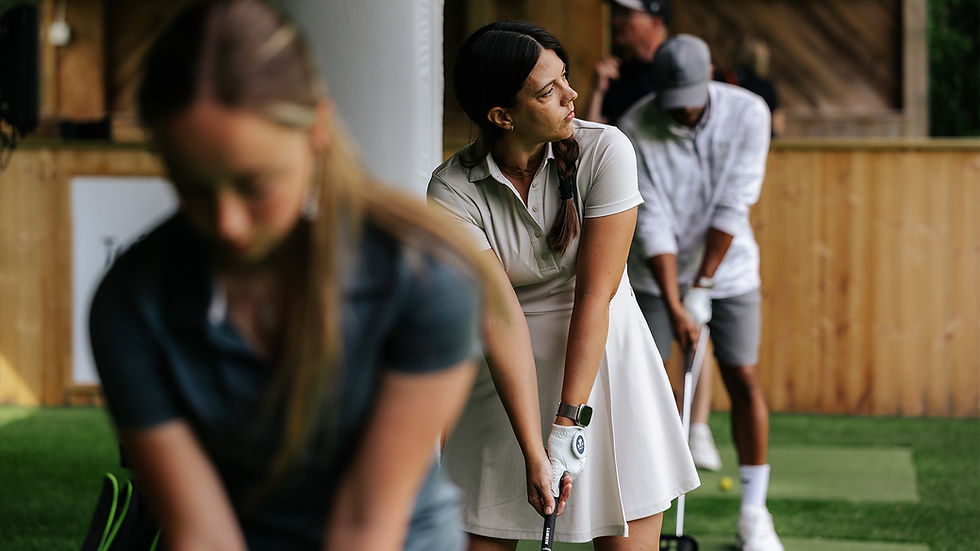
If you’re in the South Bay area, South Bay Golf Club offers a high-tech indoor space that takes all the guesswork out of setup. Their simulators provide instant feedback, making your practice sessions more productive and fun.
Bringing It All Together: Practice with Purpose
The key to improvement is not just practicing more but practicing smarter. Here’s a quick checklist to keep your indoor sessions effective:
Warm up: Start with light stretching and some easy swings.
Focus on one drill per session: Don’t overwhelm yourself.
Use video or mirrors: Check your form regularly.
Track progress: Keep a journal or use an app to note improvements.
Mix it up: Rotate drills to cover all aspects of your game.
By committing to regular, focused practice, you’ll see your skills sharpen and your scores drop. Plus, practicing indoors means no weather delays or course crowds to slow you down.
South Bay Golf Club is a fantastic resource if you want to combine these drills with advanced technology and a supportive community. It’s the perfect place to keep your game on point year-round.
Ready to take your golf game to the next level? Start incorporating these indoor golf practice drills today and watch your confidence soar. Remember, every great golfer was once a beginner who practiced with passion and purpose. Now it’s your turn!